Loading image...


Ethanol Fireplaces
Create an instant talking point
Because bioethanol is clean-burning, EcoSmart Fire models do not need a chimney or a flue, or a utility connection – offering the ultimate in design simplicity and flexibility.
Whether you're creating a custom fireplace feature, renovating an existing fireplace, or looking for an out-of-the-box solution, we have an ethanol fireplace to suit your needs.
Ethanol Ranges


Loading image...

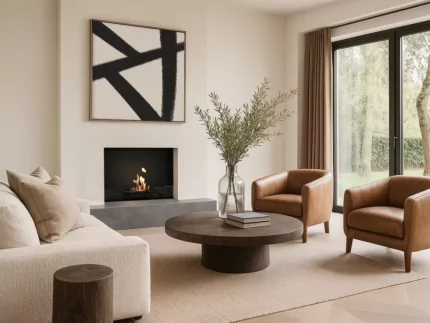
Environmentally-friendly
Fuelled by eco-friendly, readily available renewable energy – e-NRG bioethanol.
No flue, no chimney
Bioethanol is clean burning so you don't need to flue out any harmful emissions or install costly ventilation systems.
Loading image...
Architectural feature
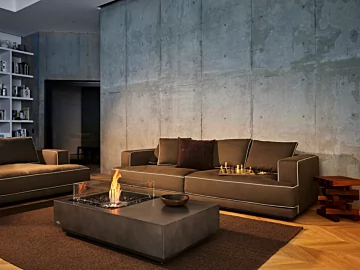
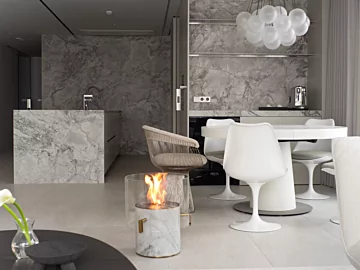
Bioethanol’s lively dancing flame creates a striking focal point for interior designers.
Loading image...


Design versatility
Easily integrated into bespoke settings – from specially-made cabinetry, media units, walls, floating timber to stone benches and pillars.
The perfect fit
The streamlined design of the products synchronises effortlessly within award-winning architectural projects.
Loading image...
Loading image...
Ventless design
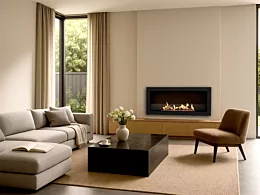
No venting required so ethanol fireplaces fit apartments, renovations, and compact spaces.
Supplemental heating
Add cozy zone warmth with modern fire features to complement your primary heating system.
Powered by e-NRG
Premium liquid fuel engineered for clean, consistent flames with low odour and zero smoke.
Related Collections
Learn More
Ethanol Fireplaces
Bioethanol Fireplaces
Ventless Fireplaces
FAQ's
Can I extinguish the ethanol fireplace before the fuel has burnt?
Yes, you can turn off your EcoSmart Fire bioethanol fireplace at any time, even if fuel remains in the burner. Simply close the slider or lift the lid to shut off the flame immediately. The shut-off mechanism is designed for your control, particularly in situations where you need to leave the house, since it's not safe to leave a burning fireplace unattended.
For best results when relighting, wait at least 60 minutes after extinguishing to allow vapours to dissipate. This prevents a strong initial ignition when you restart the flame. If you need to refuel after extinguishing, the burner must be cool to room temperature before adding fresh bioethanol. These waiting periods are simply the correct way to use the fireplace responsibly, ensuring a smooth relight and safe operation.
Do ethanol fireplaces require professional installation?
No, EcoSmart Fire ethanol fireplaces don't require professional installation for most homeowners and builders. Freestanding units need no tools beyond included accessories; built-in models require only basic hand tools (power drill, screwdriver, level) and a non-combustible framing structure that's self-supporting.
Most installations complete in under an hour to a day, depending on whether you're placing a freestanding unit on a level surface or custom-framing a built-in model. Zero-clearance construction eliminates the structural complexity of traditional fireplaces, with no chimney engineering, no gas line coordination, and no specialist trades required.
If you're converting from an existing gas fireplace, arrange professional gas disconnection before installation begins. This is a straightforward, one-time safety step completed by a qualified technician.
For complex custom cabinetry, load-bearing integrations, or commercial projects, engaging a builder familiar with fireproof materials ensures optimal results and code compliance across jurisdictions. The EcoSmart Fire installation guides and instructional videos included with every purchase walk you through the process step by step.
Can ethanol fireplaces be used as primary heat sources?
Ethanol fireplaces work best as supplemental heat sources paired with existing climate control, rather than as primary heating for your home. EcoSmart Fire bioethanol burners deliver genuine warmth. The XL900, for example, produces 4 kW (15,000 BTU/h) of thermal output, and because the fireplace is ventless with closed combustion, every BTU stays in the room rather than escaping through a flue.
This makes them ideal for extending your entertaining season, reducing heating demand in a gathering space, or replacing a traditional fireplace entirely. You'll get real warmth and flame without installing gas lines, venting, or structural modifications. Pair it with your existing heating system for full-home comfort, and use the fireplace to create warm focal points in spaces you want to enjoy more, such as a sitting room or outdoor entertaining area.
Can ventless fireplaces cause moisture problems?
Yes, room-vented bioethanol fireplaces do produce water vapour through combustion, and condensation can occur in spaces that are undersized or poorly ventilated. EcoSmart Fire's design addresses this directly: minimum room volume requirements are scaled to each burner's heat output, ensuring moisture disperses safely across the air volume rather than accumulating on surfaces.
Smaller burners (around 4 kW) need at least 110 m³ [3,885 ft³], whilst larger burners (13 kW) require 330 m³ [11,654 ft³] or more. This scaling ensures combustion byproducts, including water vapour and carbon dioxide, are diluted proportionally to the burner's output.
In properly sized rooms with normal air circulation (doors, windows, existing HVAC), condensation is not an issue. Problems arise only when a fireplace is oversized for its space or installed in a room with poor air exchange; matching the burner size to the room prevents either outcome.
Separately, ambient moisture from external sources, such as humid storage environments or spilled water, can contaminate the burner reservoir and prevent ignition. This is a maintenance concern distinct from normal combustion, resolved by draining, drying, and refuelling with fresh bioethanol.
Can I refill my bioethanol fireplace while it's running?
No, never refuel your EcoSmart Fire bioethanol fireplace while it's running or hot. Bioethanol requires careful handling: even if the flame isn't visible, a common occurrence in daylight, the burner remains dangerously hot and volatile vapours persist long after the flame appears extinguished. Contact with any ignition source at this stage can cause serious injury.
Always allow the fireplace to cool completely for at least 60 minutes after shutting off before refuelling. The cool-down is part of the rhythm of responsible ownership. When refuelling, use only the approved Safety Nozzle adapter or Jerry Can with Safety Spout, never pour directly from a bottle over or near the burner. If you spill fuel, remove all ignition sources, open windows and doors for ventilation, wipe the area dry, and wait until it's completely dry before relighting.
UL 1370-certified EcoSmart Fire bioethanol fireplaces are designed for safe indoor use when operated correctly. Pairing the correct cool-down protocol with e-NRG bioethanol fuel ensures consistent performance and safety.
What is bioethanol fuel made from?
e-NRG bioethanol is produced from renewable plant sugars, primarily corn and sugarcane grown in dedicated energy crops, through multi-stage fermentation and distillation. The fermentation process converts plant sugars into ethanol, which is then distilled to achieve premium purity levels of 96–97% ethanol by volume. This purity is essential: it exceeds the azeotrope limit of 95.6%, enabling complete combustion, a stable flame, and extended burn duration. A small amount of water and denaturants (methanol or Bitrex) is retained for safety and regulatory compliance.
e-NRG's distillation process ensures superior thermal efficiency of 90–95%, compared to 75–85% for lower-grade alternatives. Each production batch is tested for purity, moisture content, and specific gravity with full traceability at every stage, guaranteeing consistency and quality.
Because bioethanol comes from renewable crops, the fuel completes a closed-loop carbon cycle: CO₂ released during combustion is reabsorbed by growing crops, creating a carbon-neutral energy source. This renewable, plant-based origin is what makes e-NRG bioethanol a genuinely sustainable choice for premium bioethanol fireplaces.
How long does it take to assemble an ethanol fireplace?
Setting up an EcoSmart Fire bioethanol fireplace is quick and straightforward, with timelines varying by product type.
Freestanding fireplaces require the least time: simply unpack and position them in your desired location. No tools or assembly. This takes minutes.
Insert models, including the Flex range, involve basic assembly of the firebox and burner frame. The Flex Single Sided, for example, includes ten assembly steps: frame construction, mounting, burner placement, glass panel installation, windscreen, and media arrangement. With basic hand tools (power drill, screwdriver, level), most people complete this work in 30 to 45 minutes.
Fire Pit Kits follow a similar pattern. The six core assembly steps (frame assembly, burner installation, connections, ignition test, fuel fill, and safety verification) typically take 45 minutes to an hour for someone working with basic tools.
Heritage and Grate models, designed to retrofit into existing traditional fireplace openings, skip frame assembly entirely: unpack and insert into the opening.
The longest part of any installation is usually not the appliance assembly itself, but preparing the installation space. Selecting placement, confirming clearance compliance with your model's safety requirements, and finishing any surrounding cabinetry or surrounds are the variable factors.
Are there any building codes or regulations for ventless fireplaces?
As a room-vented design, ventless bioethanol fireplaces are regulated under product safety standards (UL 1370, EN 16647, ACCC) rather than traditional building codes that govern gas or wood-burning installations. EcoSmart Fire ventless fireplaces meet these safety standards and require no chimney, gas lines, or electrical hookups, which eliminates many code compliance complexities. Because bioethanol combustion produces no smoke or harmful emissions, ventless fireplaces bypass venting and structural requirements that apply to conventional fireplaces.
Regulations do vary by jurisdiction, so we recommend consulting your local building authority during the design phase to confirm any region-specific requirements for your project. Key installation specifications, such as 600 mm [23.6 in] clearance from combustibles and adequate room volume (typically 40–110 m³ for most residential models), are designed to ensure safe operation and are integrated into all EcoSmart Fire product documentation.
The ventless design simplifies the approval process because it eliminates the need for multiple trades (gas fitting, electrical, ventilation) and their associated code pathways. This makes ventless fireplaces particularly practical for retrofits, multi-residential applications, and properties where traditional fireplaces aren't viable.
Can ethanol fireplaces be used outdoors?
Yes. EcoSmart Fire offers dedicated outdoor fireplace categories: fire tables, fire pits, and insert-style units, all rated for outdoor use. These are engineered with weather-resistant materials: mild steel with zinc-sealed high-temperature powder coating, 304-grade stainless steel burners, and toughened glass screens. Fire tables feature handcrafted Fluid Concrete surrounds or Grade A teak; fire pits use weather-resistant Fluid Concrete construction.
To install safely outdoors, follow these clearance guidelines:
- 2,000 mm [78.7 in] clearance overhead
- 600 mm [23.6 in] clearance from fixed objects (walls, fences, railings)
- Level, non-combustible surface (stone, concrete, pavers; not grass or artificial turf)
- 12.5 mm [0.5 in] air gap beneath the unit, typically via articulating feet
Because bioethanol produces no sparks, embers, or ash, the units are safe for timber decks when proper clearances are maintained. They're suitable for year-round entertaining. Simply keep burners clean every 50 litres of fuel, and use an All-Season Cover (600D Oxford fabric with UV coating) for storage.
Do ethanol fireplaces produce enough heat?
Yes, ethanol fireplaces produce genuine, clean-burning heat that meaningfully warms spaces. EcoSmart Fire bioethanol fireplaces deliver quantified heat output across burner sizes: compact burners like the AB3 produce 2 kilowatts (5,800 BTU/h) and warm spaces around 20 m² [215 ft²], whilst larger models like the XL900 output 4 kilowatts (15,000 BTU/h) and effectively heat areas up to 60 m² [646 ft²].
The real advantage lies in the ventless design: heat efficiency exceeds 90 per cent because all thermal energy stays in your room, unlike traditional vented fireplaces that lose approximately 30 per cent through the chimney.
To choose the right burner, match it to your room size. Smaller burners suit compact rooms around 20 m², mid-range burners heat spaces of 40–60 m² comfortably, and larger configurations work for open-plan interiors. Burner selection also affects burn duration, with most models running 7–14 hours depending on flame height; consider both your heating needs and intended use.